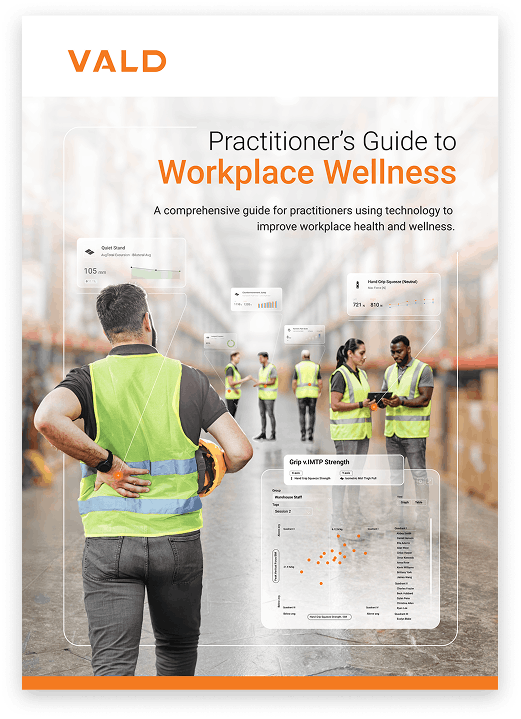
Practitioner’s Guide to Workplace Wellness
A comprehensive guide for practitioners using technology to improve workplace health and wellness.

Occupational health doesn’t need to be reactive.
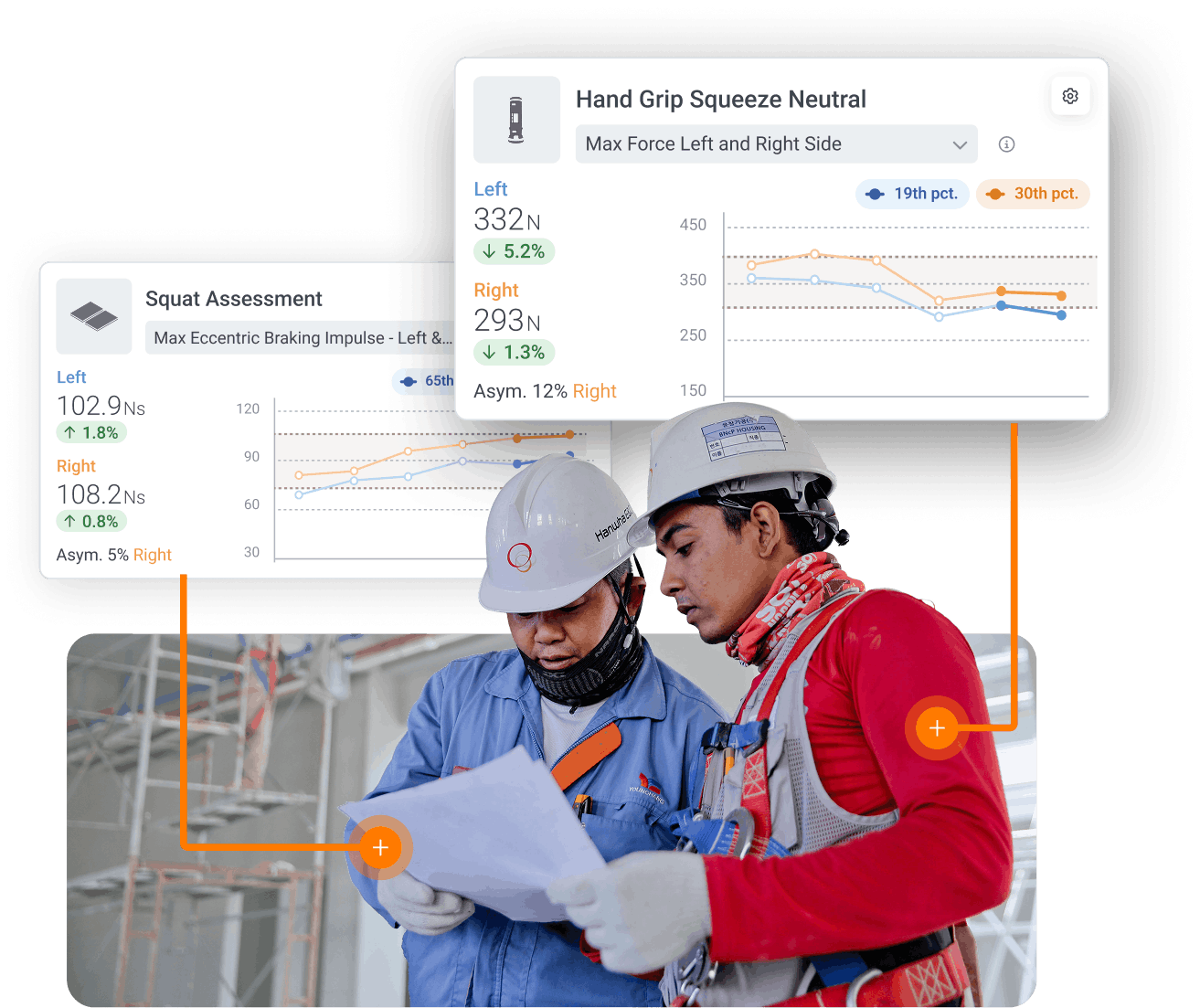
Musculoskeletal injuries remain one of the leading drivers of lost work time and cost across industries. Despite this, most workplace health strategies still rely on reactive care, self-reported symptoms or generalized wellness initiatives.
This guide outlines how practitioners can apply objective assessment to workplace environments, using structured testing, clear reporting and targeted intervention to better understand and develop workforce capacity. By aligning assessment with job demands, practitioners can support injury reduction, improve performance and create scalable service models within occupational settings.
Some questions we'll answer in this guide:
- Q: How can I implement objective testing in workplace settings?
- Q: Which assessments are most relevant for different workforces?
- Q: How do I interpret results using tools like?
- Q: How can I structure services to create long-term partnerships?
- Q: What does a scalable workplace wellness model look like?
... and much, much more.
The ability to act quickly on risk improves outcomes for both individuals and groups in workplace wellness settings.
Creating an environment where data builds risk profiles, provides meaningful insights and supports timely intervention drives value for all parties.
This is not the future; it is the here and now, and it will only get better.